Golf courses demand a high standard of presentation, reliable access routes and surfaces that remain durable under varied weather conditions. Paths, buggy routes and access areas all contribute to how smoothly a course operates and how players experience each hole. For grounds teams, choosing a paving system that can withstand regular use, support year-round maintenance, and blend into the landscape is an important part of course management.
Golf course paving must be durable, low-maintenance and effective in all weather. Resin-bound gravel and SUDS-bond permeable paving are two reliable options for pathways, buggy routes and access areas. This guide explains how each surface performs, helping clubs and grounds teams choose the most suitable solution for their course.
This guide outlines the paving solutions available from Abacus that are suitable for golf courses, comparing their performance, drainage capabilities, durability and typical applications across the course. It is written to support clubs and grounds managers as they plan upgrades or maintenance programmes.
What Golf Courses Need From a Paving System
Golf course environments present unique challenges. Surfaces must support:
• Frequent foot traffic
• Regular buggy use
• Machinery access
• Exposure to unpredictable weather
• Natural landscape integration
• Low maintenance expectations
Beyond strength and appearance, drainage is a critical factor. Poorly draining paths quickly become difficult to use, especially after heavy rainfall. Sustainable drainage design is widely recognised in UK guidance, where permeable systems are encouraged to reduce surface water build-up.
The ideal paving system should therefore offer:
• Reliable strength
• Permeability where needed
• Good slip resistance
• Low visual impact
• Resistance to wear and rutting
• Minimal ongoing maintenance
Resin Bound Gravel, A Leading Surface for Golf Courses
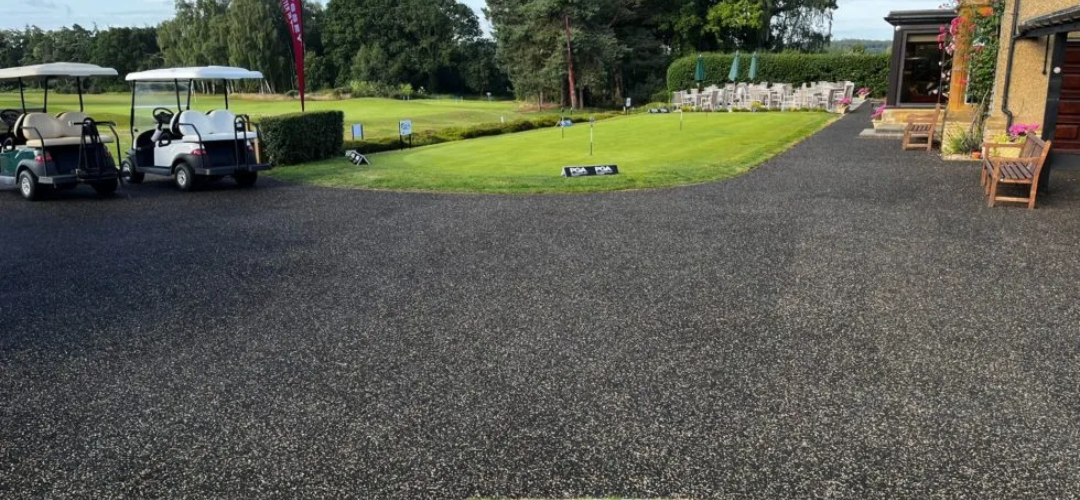
Resin-bound gravel is one of the most effective surfacing systems for golf courses. It combines natural aggregate stones with a clear resin binder, which is then hand-trowelled to create a smooth, seamless finish.
Why It Works Well in Golf Environments
• Permeable construction
When installed onto a suitable sub-base, resin-bound gravel forms a porous surface that allows water to drain through effectively. This helps to maintain year-round usability and reduces standing water.
• Smooth, slip-resistant finish
The compacted structure provides reliable traction for both pedestrians and buggies.
• Natural appearance
Resin-bound gravel blends well with golf course landscapes due to its wide selection of stone blends, from warm natural tones to cooler aggregates.
• Durable underfoot and buggy traffic
The finished surface withstands repeated use and remains stable under turning manoeuvres, which are common around tees, greens and clubhouse walkways.
• Low maintenance
Routine sweeping and occasional low-pressure cleaning are typically sufficient to maintain appearance.
Typical Applications on Golf Courses
• Buggy paths
• Pedestrian walkways
• Entrances to tees and greens
• Around practice areas
• Links between course facilities
• Courtyards and access zones
Resin-bound gravel is often chosen for high-visibility areas where aesthetic consistency and long-term performance are important.
SUDS-bond® Permeable Paving, Best for Drainage-Sensitive Areas
SUDS-bond is a permeable paving system designed specifically to address drainage issues. Like resin-bound gravel, it supports Sustainable Drainage Systems (SUDS) principles, which aim to manage rainwater run-off effectively and reduce flooding risks.
Key Strengths
• High permeability
SUDS-bond is engineered to maintain exceptional drainage performance, making it suitable for slopes, shaded areas and ground that naturally holds water.
• Durability
It provides a stable, resilient surface for foot traffic and light maintenance vehicles.
• Texture and appearance
The finished surface offers a natural stone look similar to resin-bound gravel, ensuring visual consistency across the course.
• Ease of use
Ideal for maintenance routes, equipment access areas and locations where water management is a priority.
Typical Applications
• Drainage-prone paths
• Shaded slopes
• Areas adjacent to ditches, ponds or water features
• Maintenance routes and service zones
• Access paths linking facilities
Clubs in wetter regions or located on clay-heavy ground often benefit from a permeable paving system such as SUDS-bond.
Resin Bound vs SUDS-bond, A Clear Comparison
Although both systems share similar properties, their performance characteristics differ slightly depending on site demands.
| Feature | Resin Bound Gravel | SUDS-bond® Permeable Paving |
| Permeability | Buggy paths, walkways, and entrances | Extremely high; optimised for drainage |
| Appearance | Smooth, decorative stone finish | Natural stone look with a more textured profile |
| Best Use | Strong underfoot traffic and maintenance access | Drainage-sensitive areas, slopes, wet ground |
| Durability | Strong under foot and buggy traffic | Strong underfoot and buggy traffic |
| Maintenance | Minimal | Minimal |
| Strength | Excellent for general pathways | Excellent for routing water and preventing standing water |
Both surfaces complement each other, and many courses use them together to create a complete path network that handles varied terrain and weather conditions.
Additional Surfacing Options for Non-Pathway Areas
While paving is essential for paths and access routes, certain areas of a golf course benefit from different surface types. The following solutions, provided by Abacus, can support landscaping and facility design.
Artificial Grass Surfaces
Artificial grass can be effective in selected golf course applications due to its natural appearance and year-round usability. It is low maintenance, porous and practical in locations where natural grass struggles to grow.
Appropriate Uses:
• Tee surrounds
• Seating areas
• Spectator zones
• Practice green borders
• Around clubhouse entrances
Artificial grass should not be used for buggy routes or high-traffic paths but provides clean, tidy landscaping in controlled areas.
Wet Pour Surfacing (Specific, Limited Use Cases)
Wet pour is not used on the main golf pathways. However, it may be relevant in:
• Children’s play areas at family-friendly golf clubs
• Adventure golf or training zones
• Accessible recreational spaces near club facilities
It should not be framed as a primary paving material for the course itself.
Key Considerations Before Upgrading Golf Course Paving
Proper planning ensures long-lasting results. Grounds teams should evaluate:
1. Ground Conditions and Drainage
Understanding how water moves across the landscape is essential before selecting a surface.
2. Traffic Patterns
Identify where buggies turn, accelerate or brake. These areas benefit from robust surfaces such as resin-bound gravel.
3. Visual Impact
Surfaces should complement the natural surroundings and maintain a consistent course aesthetic.
4. Slopes and Uneven Terrain
Steep or wet slopes may require a more permeable system, such as SUDS-bond.
5. Maintenance Capacity
Both resin-bound and SUDS-bond are low-maintenance systems, but pathways should still be reviewed periodically to maintain permeability.
6. Installation Requirements
Assess access for installation equipment, weather windows and any groundworks required.
Maintenance Expectations for Golf Course Paving
Although both resin-bound gravel and SUDS-bond are low-maintenance, they benefit from straightforward care:
Resin Bound Gravel
• Sweep to remove debris
• Occasional low-pressure washing
• Keep the surface free from organic build-up
SUDS-bond
• Similar to resin-bound
• Maintaining permeability is the main priority
General surface upkeep aligns with long-accepted play and landscape maintenance guidance, including principles outlined in RoSPA’s public safety advice on surface care.
Which Surface Should Be Used Where?
A clear breakdown helps clubs map out their course improvements:
Main buggy routes
→ Resin Bound Gravel
Paths on slopes or poor-drainage ground
→ SUDS-bond
High-visibility walkways and arrival areas
→ Resin Bound Gravel
Maintenance access paths
→ SUDS-bond
Tee surrounds, landscaped zones
→ Artificial Grass
Family activity or recreation areas
→ Wet Pour (only where appropriate)
The combination of resin-bound and permeable performance surfaces gives clubs a balanced, reliable solution for the full course environment.
Overall Benefits of Upgrading Golf Course Paths
While results vary by course, grounds teams typically report:
• More reliable year-round access
• Reduced erosion and rutting
• Better water management across paths
• A cleaner, more professional course presentation
• Lower long-term costs compared to loose stone or deteriorating tarmac
These advantages support smoother play, easier maintenance and a better overall experience for members and visitors.
Conclusion
Well-designed paving is an essential part of maintaining a functional and visually cohesive golf course. Resin-bound gravel provides a strong, attractive and durable solution for most pathways, while SUDS-bond offers enhanced drainage for challenging areas. Artificial grass and selective wet pour applications complement the course in specific zones.
Abacus supplies and installs all of these systems and can advise on the most suitable surface for each area of your course.
For tailored guidance on pathway design, drainage needs and surfacing specifications, contact Abacus. Our team can assess your course and recommend the most suitable paving solution for each area.