Selecting the right playground safety surface is an important decision for schools, councils and organisations responsible for public spaces. Surface choice influences long-term safety, usability, accessibility, maintenance requirements and overall project cost. Two of the most widely used impact-absorbing surfaces in the UK are wet pour and bonded rubber mulch. Both meet recognised playground safety standards when correctly installed, yet each has characteristics that make it more suitable for certain environments.
Wet pour and rubber mulch are two widely used playground safety surfaces, each offering reliable impact absorption and EN1177 compliance when correctly installed. Wet pour provides a smooth, colourful finish, while rubber mulch offers a natural, textured appearance suited to parks and woodland areas. This guide compares both to support informed decision-making.
The following comparison outlines how wet pour and rubber mulch differ in performance, appearance and practicality, helping you understand which surface best suits your play environment.
What Is Wet Pour Surfacing?
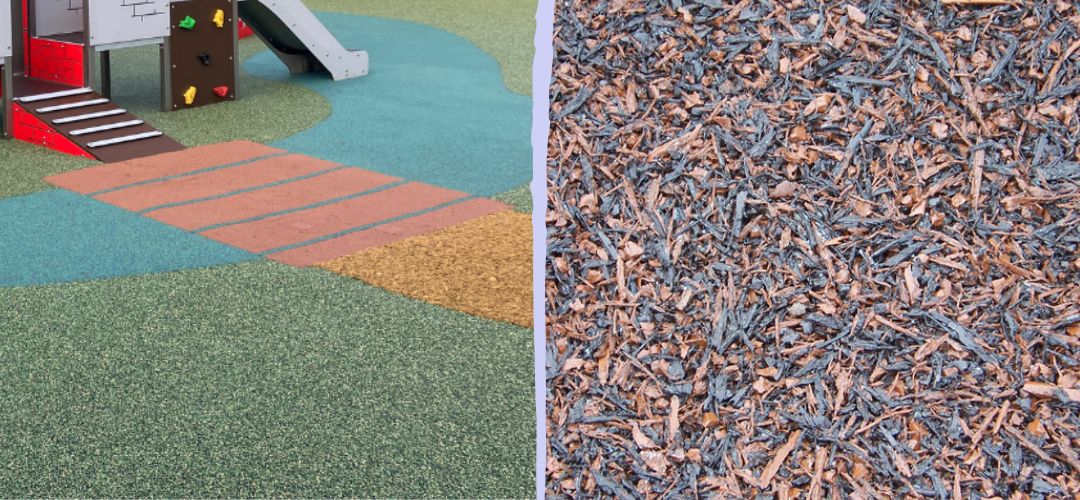
Wet pour is a continuous, in-situ rubber safety surface made from a two-layer system. The base course typically uses SBR (styrene-butadiene rubber) granules bound with polyurethane resin, providing impact absorption. Above this sits a coloured EPDM rubber top layer, which delivers a durable, visually consistent finish.
Because it is mixed and laid on site, wet pour forms a seamless surface with no joins or loose material. It is widely used in schools, public playgrounds, parks, sports areas and splash zones. When installed to the correct depth, wet pour is fully compliant with EN1177, the European standard for impact-attenuating playground surfacing and critical fall height performance.
Key characteristics include:
• Smooth, uniform appearance
• Wide choice of colours
• Excellent impact absorption
• Suitable for high-use playgrounds
• Consistent performance across the entire surface
Because of its design flexibility, wet pour is often used where playground graphics, colour zoning or themed play areas are required.
What Is Rubber Mulch Surfacing?
Rubber mulch, often referred to as bonded rubber mulch, is made from shredded recycled rubber coated in a durable, pigmented binder. Once mixed with polyurethane resin and laid onto a prepared base or directly onto grass (depending on site conditions), the shredded particles form a single, bonded layer that resembles natural bark.
This type of surfacing is popular in natural play environments, woodland areas, public parks and spaces where a softer, more organic appearance is preferred. Rubber mulch can also be installed to comply with EN1177 when applied at the correct thickness for the equipment’s critical fall height requirements.
Because the material uses recycled rubber, it supports waste-reduction and circular-economy practices. The use of recycled rubber in surfacing is widely recognised by organisations such as WRAP (Waste and Resources Action Programme), which highlights its environmental benefits in approved construction products.
Typical characteristics of rubber mulch include:
• Natural, bark-effect appearance
• Flexible installation, including uneven terrain
• Strong performance in shaded or damp areas
• Durable, low-maintenance structure
• Useful for rural or landscaped play spaces
Safety and Critical Fall Height Performance
Safety is the primary requirement for any playground surface. Both wet pour and rubber mulch can meet critical fall height (CFH) performance criteria when installed to the correct depth and in accordance with EN1177.
Wet pour
• Predictable, uniform impact absorption due to consistent material composition
• Often preferred for equipment with fixed CFH requirements
• Detailed depth specifications are well established within the industry
Rubber mulch
• Provides strong impact absorption
• Depth requirements vary according to equipment height and site conditions
• Particularly effective beneath timber trails or in natural play zones
In practical terms, both surfaces are suitable for areas with elevated equipment. The correct choice usually depends on design preferences, budget, and environmental constraints rather than safety capability alone.
Durability and Long-Term Performance
Wet Pour
Wet pour offers strong durability and retains its shape under regular use. The EPDM top layer is resistant to UV fading and wear, making it suitable for busy urban playgrounds and school environments. When correctly maintained, the surface provides consistent performance over long periods.
Rubber Mulch
Rubber mulch performs well in outdoor, natural settings where moisture, foliage or shade may affect other surfaces. The bonded structure prevents material displacement, and its textured appearance helps conceal minor wear more easily than smooth surfaces. It is also less sensitive to minor ground movement compared to continuous systems.
The best choice for long-term performance will depend on the setting. Schools and urban playgrounds often favour wet pour for its consistency, whereas parks and woodland-style environments frequently benefit from the visual and functional qualities of rubber mulch.
Installation Differences
The installation process is an important consideration in choosing the right surfacing system.
Wet Pour
• Requires a prepared sub-base such as dynamic stone, concrete or tarmac
• Installed as a mixed, poured and trowelled system
• Produces a completely smooth, seamless finish
• Best suited to new playground builds or full surface replacements
Rubber Mulch
• Can often be installed over existing grass or uneven ground (site dependent)
• Flexible in areas with tree roots, slopes or natural contours
• Creates a textured, bark-like finish
• Suitable for projects where ground preparation is limited or minimised
Visual Appearance and Design Options
Appearance is often a deciding factor, particularly in schools and parks where the surfacing contributes to the overall character of the environment.
Wet Pour
• Available in a wide range of colours
• Supports playground markings, shapes and themed designs
• Smooth, contemporary finish
Rubber Mulch
• Natural, wood-effect aesthetic
• Blends effectively with landscaped or woodland areas
• Available in several earth-tone shades and colour blends
Where bright colours or creative graphics are needed, wet pour tends to be the most suitable option. Rubber mulch is more appropriate where the goal is to complement natural surroundings.
Maintenance Requirements
Both wet pour and rubber mulch are low-maintenance surfaces.
Wet Pour
• Occasional cleaning helps remove algae, dirt or organic debris
• Regular checks for edge wear or damage are beneficial
• Easy to keep clean due to its smooth finish
Rubber Mulch
• Requires minimal upkeep
• Porous, open structure reduces standing water
• Natural appearance helps conceal everyday outdoor debris
General maintenance principles for playground surfaces can be referenced through RoSPA’s guidance for safe play surface management.
Cost Considerations
Cost varies according to surface depth, area size, sub-base preparation, access to the site and any design enhancements such as graphics. Wet pour tends to require more structured groundwork, while rubber mulch may offer cost savings on uneven or grassed terrain.
Because price is dependent on project-specific conditions, the blog must not list figures, but should encourage readers to seek a tailored quotation based on accurate measurements and site assessments.
When to Choose Wet Pour vs Rubber Mulch
Wet Pour is often the better choice when:
• Bright colours or graphics are required
• The play area is in constant use, such as at a school
• A smooth, modern finish is preferred
• A larger area is being installed or resurfaced
Rubber Mulch is often the better choice when:
• A natural aesthetic is needed
• The site has uneven or challenging ground conditions
• A woodland or landscaped setting needs minimal visual disruption
• Installation over grass is desirable (where appropriate)
Both surfaces are suitable for high-quality, long-lasting playgrounds. The right surface depends on the environment, equipment, design goals and site constraints.
Working With a Professional Installer
Correct installation is essential for meeting safety standards, achieving long-term performance and ensuring compliance. A professional surfacing contractor will:
• Assess the site and provide accurate depth specifications
• Confirm sub-base requirements
• Ensure materials meet recognised standards
• Install to EN1177 guidelines
• Provide aftercare and maintenance recommendations
Conclusion
Wet pour and rubber mulch are both reliable, impact-absorbing playground surfacing systems with proven safety credentials. Wet pour offers a smooth, colourful and highly versatile finish suited to schools and busy playgrounds. Rubber mulch provides a natural, textured appearance that works well in parks, wooded areas and landscape-led play spaces. By understanding the characteristics of each, organisations can select the surface that best supports safety, durability and the overall design of their play environment.
Abacus can provide site surveys and specifications for both wet pour and rubber mulch, helping ensure the surface chosen is suitable for the equipment, location and long-term use of the space.
If you’re planning a new playground or upgrading an existing space, our team can provide clear guidance, accurate specifications and a detailed quotation. Contact Abacus to arrange a site visit and discuss the most suitable safety surfacing for your project.