Creating a safe and durable outdoor play space is a priority for schools, councils and organisations responsible for public spaces. The surface beneath play equipment is a key component of that safety. It influences impact absorption, accessibility, maintenance requirements and long-term performance, all of which contribute to how children interact with the space every day.
Schools and councils can choose from several reliable playground flooring options, including wet pour, bonded rubber mulch and artificial grass. Each surface offers different benefits for safety, durability, appearance and maintenance. This guide explains how these systems perform so decision-makers can select the most suitable option for their play environment.
There is no single “best” playground flooring for every project. Instead, the most suitable choice depends on the location, required safety performance, expected footfall, design goals and site conditions. This guide outlines the proven surfacing systems supplied and installed by Abacus, explaining how each performs and where it is most appropriately used.
What Schools and Councils Should Look for in Playground Flooring
Before reviewing available surface types, it is essential to understand the criteria that define a safe and compliant playground surface.
Impact Absorption and EN1177 Compliance
Any surface used beneath playground equipment must meet the impact attenuation requirements outlined in EN 1177:2018, the European standard for critical fall height performance.
Surfaces must be installed at the correct depths to achieve the required level of protection.
Durability and Suitability for High-Use Areas
School and council playgrounds experience heavy daily use. Surfaces must withstand constant footfall without premature wear, movement or displacement.
Accessibility
Smooth, continuous surfaces support wheelchair users, pushchairs and children with mobility needs.
Drainage and Weather Performance
Outdoor play must be available year-round. Surfaces should handle rainfall effectively and reduce standing water.
Maintenance Requirements
Low-maintenance materials reduce long-term costs and keep the area safe and usable.
With these criteria in mind, the following sections outline the strongest flooring options available to schools and councils through Abacus.
Wet Pour Surfacing – A High-Performance Safety Surface
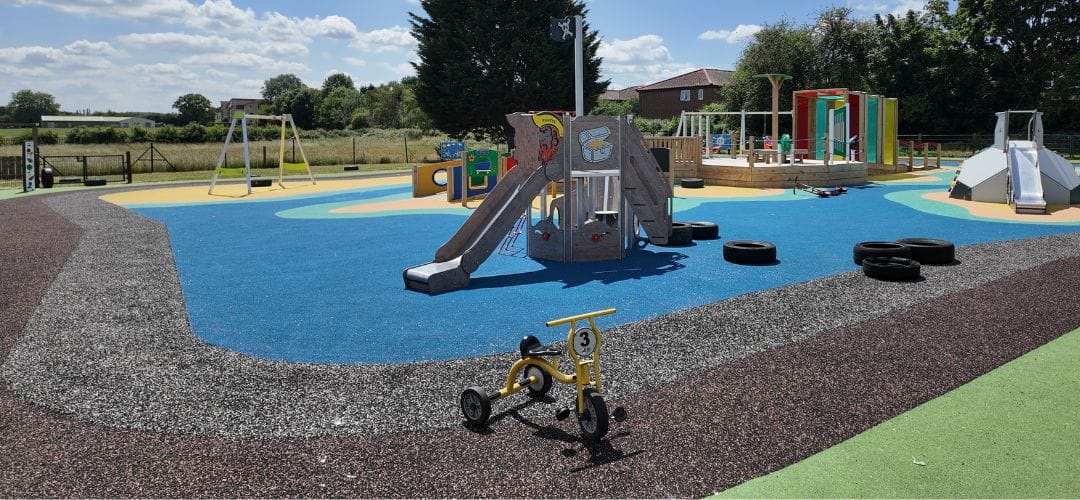
Wet pour is one of the most widely used playground surfacing systems in the UK education sector. It consists of a two-layer structure: a shock-absorbing SBR (styrene-butadiene rubber) base layer topped with a coloured EPDM rubber wearing course.
Why Schools and Councils Choose Wet Pour
• Consistent, seamless finish
• Fully compliant with EN1177 when installed to the correct depth
• Large range of colour options
• Allows for playground graphics, markings and themed designs
• Excellent drainage due to porous structure
• Suitable for both early years and key-stage play environments
• Ideal for high-use areas such as primary school playgrounds
Wet pour performs well in open spaces, multi-activity zones and locations where a clean, modern aesthetic is preferred. It is particularly useful when the playground design incorporates colour-based learning zones or game markings.
Mulchbond® Bonded Rubber Mulch – Best for Natural or Uneven Areas
Bonded rubber mulch is a practical surfacing option designed to resemble natural wood bark. It is made from recycled rubber coated in a durable, pigmented binder. This makes it an environmentally responsible choice; recycled rubber is highlighted by WRAP (Waste and Resources Action Programme) as a viable, sustainable material in construction.
Key Benefits for Schools and Councils
• Natural appearance suited to parks, woodland areas and landscaped spaces
• Can be installed over grass or uneven terrain (project dependent)
• Compliant with EN1177 at appropriate depths
• Highly durable and suitable for heavy use
• Low maintenance
• Blends well into natural surroundings
• Effective beneath timber trails and outdoor adventure equipment
Rubber mulch is often selected by councils managing large public parks or rural play areas, as well as schools with extensive green zones or woodland play features.
Artificial Grass Surfaces, Clean, Soft and Suitable for Year-Round Play
Artificial grass surfacing combines the appearance of natural grass with the reliability of a synthetic, all-weather system. Play-grade artificial grass typically uses a durable backing and a pile height appropriate for children’s play, with the option of a shockpad layer to provide impact protection where required.
Why It Is a Strong Option
• Provides a clean, soft surface throughout the year
• Does not wear into muddy patches
• Fully porous, allowing fast drainage
• Shockpad can be included to meet EN1177 requirements
• Consistent appearance and texture
• Low maintenance
• Suitable for early years settings, sensory areas and outdoor classrooms
RoSPA highlights the importance of surfacing that offers predictable impact absorption and safe year-round play conditions. Artificial grass aligns well with these principles when correctly installed.
Resin Bound Gravel, Best for Pathways, Entrances and Access Routes
Although resin-bound gravel is not an impact-absorbing playground surface, it plays an important supporting role in outdoor environments. It is used for pathways, approach areas, courtyard spaces and circulation routes around playgrounds.
Key Advantages
• Fully permeable system suitable for drainage-sensitive areas
• Compliant with Sustainable Drainage Systems (SUDS) requirements when installed on an appropriate base.
• Smooth, slip-resistant finish
• Natural stone appearance in a range of blends
• Durable under regular pedestrian use
Schools and councils often use resin-bound gravel to connect playgrounds to surrounding buildings or outdoor teaching areas.
SUDS-bond® Permeable Paving, For Areas Prone to Water Build-Up
SUDS-bond is a permeable resin-bound surfacing system designed for locations where controlling surface water is essential. It supports sustainable drainage and reduces the formation of puddles in high-traffic areas.
Well-Suited For
• Outdoor learning areas
• Zones with frequent footfall
• Spaces prone to standing water
• Pathways surrounding play zones
As with resin-bound gravel, SUDS-bond is not an impact surface but complements playground design by improving accessibility and managing water flow.
Multi-Use Games Areas (MUGAs), Purpose-Built for Sport and PE
A Multi-Use Games Area provides a dedicated space for school sports activities. While not used beneath playground equipment, MUGA surfacing supports structured PE, lunchtime activity zones and community sports use.
Advantages for Schools and Councils
• Durable surface engineered for ball sports
• Defined court markings
• All-weather performance
• Ideal for maximising outdoor space
A MUGA often forms part of a wider outdoor provision strategy, working alongside wet pour or artificial grass for play.
Daily Mile Track Surfacing, For Fitness and Whole-School Activity
Daily Mile tracks offer a consistent, all-weather surface that supports schools participating in physical activity programmes. They provide children with a stable, predictable running surface that encourages regular movement throughout the week.
Benefits
• Smooth, resilient surfacing suitable for repeated daily use
• Can be installed around existing fields or playgrounds
• Helps reduce wear on natural grass routes
• Encourages sustainable, long-term activity habits
Daily Mile tracks are frequently combined with other playground flooring types to create a complete outdoor activity environment.
How to Choose the Best Surface for Your School or Council Site
The ideal playground surface depends on several practical factors.
1. Safety and Fall Height Requirements
If equipment has significant fall heights, wet pour or rubber mulch are usually the most appropriate choices.
2. Ground Conditions
Wet pour requires a prepared base, while rubber mulch can be more flexible on uneven terrain.
3. Aesthetic Goals
• Wet pour: bright colours and graphics
• Rubber mulch: natural appearance
• Artificial grass: clean, soft, grass-like finish
4. Maintenance Expectations
All systems offered by Abacus are low maintenance, though their appearance and upkeep needs vary.
5. Budget and Installation Constraints
Rubber mulch may reduce groundwork costs in certain settings, while wet pour provides strong long-term value for busy schools.
6. Usage Patterns
Schools with heavy daily footfall often choose wet pour; councils managing natural landscape areas may prefer rubber mulch.
| Surface Type | Best For | EN1177 CFH Capable | Appearance | Key Strengths |
| Wet Pour | Schools, high-use areas | Yes | Smooth, colourful | Durable, versatile, supports graphics |
| Bonded Rubber Mulch | Parks, woodland, uneven ground | Yes | Natural, bark-like | Flexible installation, low maintenance |
| Artificial Grass | Soft play, sensory areas | Yes with shockpad | Natural, green | Clean year-round use |
| Resin Bound Gravel | Paths, entrances | No | Natural stone | Permeable, slip-resistant |
| SUDS-bond | Drainage-sensitive areas | No | Natural stone | Manages surface water |
| MUGA | Sports zones | Not for CFH | Sports finish | Suitable for PE and games |
| Daily Mile Track | Running/activity | Not for CFH | Track surface | Consistent, all-weather running |
Conclusion
Each playground surface serves a different purpose, and the most suitable choice depends on safety requirements, design objectives and the nature of the site. Wet pour, rubber mulch and artificial grass remain the leading impact-absorbing options for schools and councils, while resin systems and MUGA surfacing play important supporting roles in creating fully integrated outdoor environments.
Abacus provides a complete range of playground flooring systems and can advise on the most appropriate specification for your project.
For project-specific guidance, surfacing specifications or a site assessment, contact Abacus. Our team can help you determine the most suitable flooring solution for your school or council-managed space.