Across schools, parks, and community play spaces, the choice of safety surfacing has a lasting impact on how well an area performs, looks, and protects users. Wet pour surfacing has become one of the most trusted solutions for councils, schools, and contractors across the UK thanks to its proven safety standards, design flexibility, and long-term durability.
Wet pour surfacing is a two-layer rubber system made from impact-absorbing granules bound together with resin. It creates a smooth, continuous surface that meets UK safety standards for playgrounds and public spaces, providing durability, accessibility, and long-term safety underfoot.
What Is Wet Pour Surfacing?
Wet pour surfacing is one of the most widely used safety surfaces for playgrounds, schools, and public parks across the UK. It consists of two key layers:
- A base layer made from recycled SBR (Styrene Butadiene Rubber) granules that provide shock absorption.
- A top layer of EPDM (Ethylene Propylene Diene Monomer) rubber granules mixed with a resin binder to form a seamless, coloured finish.
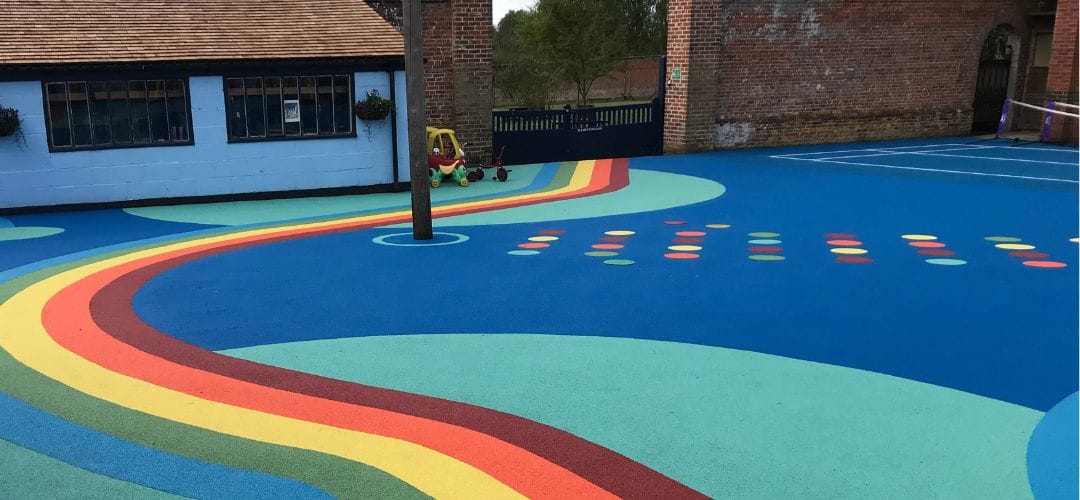
When laid correctly, this surface delivers exceptional safety, weather resistance, and design flexibility. It can be installed in almost any colour, shape, or pattern, making it ideal for both imaginative play areas and practical zones such as pathways or outdoor classrooms.
Why Wet Pour Surfacing Remains a Popular Choice
Across councils, schools, and leisure facilities, wet pour has become the go-to surface for good reason. It balances performance, compliance, and creativity within one system. Below are the main reasons why this surfacing remains a trusted solution.
1. Proven Safety Performance
The primary purpose of wet pour surfacing is to minimise injury from falls. It complies with BS EN 1177, the standard that sets out impact-absorbing surface requirements based on the Critical Fall Height (CFH) of the play equipment above.
Different thicknesses of wet pour correspond to specific fall heights, ensuring consistent safety performance under swings, climbing frames, and slides.
Critical Fall Height and Wet Pour Thickness Guide
| Critical Fall Height (m) | Wet Pour Surface Thickness (mm) |
| 1.26 | 30 |
| 1.36 | 40 |
| 1.65 | 50 |
| 2.04 | 60 |
| 2.24 | 70 |
| 2.47 | 80 |
| 2.60 | 90 |
| 2.62 | 100 |
| 2.82 | 120 |
| 3.00 | 130 |
Figures taken from Abacus Playgrounds Wet Pour Critical Fall Height Chart (Aug 2019).
These figures demonstrate how wet pour can be tailored to suit any play equipment height, offering both flexibility and assurance in safety compliance.
2. Long-Term Durability
Wet pour surfacing is built to last. Once cured, it forms a bonded, flexible layer that can withstand constant foot traffic, active play, and seasonal weather. The resin mix allows for natural ground movement without cracking or splitting.
When correctly installed on a stable sub-base such as tarmac or compacted MOT Type 1 stone, a wet pour surface can last over a decade with only occasional maintenance. This reliability makes it a smart long-term investment for councils and schools.
3. Accessibility and Inclusivity
Wet pour creates a level, continuous surface that is both wheelchair and pushchair accessible. This makes it suitable for inclusive play spaces where children of all abilities can play safely together.
Its slip-resistant texture supports safer movement in wet or frosty conditions, and the option to use contrasting colours helps visually impaired users navigate play spaces more confidently.
Many schools now combine wet pour with inclusive equipment and sensory play features to create welcoming, accessible outdoor areas for all children.
4. Endless Design Options
Unlike modular tiles or loose-fill materials, wet pour can be poured into any shape or pattern. This flexibility allows for creative playground layouts and educational markings that encourage outdoor learning and imaginative play.
- Numbers, letters, or hopscotch games can be added for learning through play.
- Themed zones (e.g., ocean, jungle, or outer space) can be brought to life through coloured granules.
- Colour zoning can help separate play areas for different age groups or activities.
At Abacus Playgrounds, our design team collaborates with schools and councils to develop layouts that combine function with creativity, ensuring every installation feels unique to the site.
5. Weather Resistance and Drainage
Wet pour Surfacing is fully porous, allowing rainwater to drain through its layers. This reduces puddles, improves grip in wet weather, and supports Sustainable Urban Drainage System (SuDS) principles by minimising surface runoff.
Its flexibility allows it to adapt to both cold and warm conditions without cracking, maintaining performance throughout the seasons. This makes it a reliable, all-weather surface for UK environments.
6. Low Maintenance Requirements
Unlike loose-fill surfaces such as bark or sand, wet pour requires little routine maintenance. Simple cleaning and occasional inspections are usually sufficient to keep it in excellent condition.
Abacus Playgrounds offers professional wet pour cleaning and maintenance services to help extend surface lifespan. Periodic checks can identify wear early, ensuring the surface remains safe and compliant for long-term use.
How Wet Pour Surfacing Is Installed
The success of a wet pour installation depends on careful preparation and expert workmanship. The process typically includes:
- Site Preparation – Excavating, levelling, and creating a suitable base with appropriate edging.
- Base Layer Installation – Applying SBR granules mixed with polyurethane binder to form the shock-absorbing layer.
- Top Layer Application – Pouring and trowelling coloured EPDM granules and resin for a smooth, seamless finish.
- Curing – Allowing 24–48 hours for the surface to fully harden before use.
Abacus Playgrounds uses experienced installation teams to ensure each project meets the highest quality and safety standards, from start to finish.
Quick Reference: Wet Pour vs MulchBond Rubber Surfacing
| Feature | Wet Pour Surfacing | MulchBond Rubber Surfacing |
| Appearance | Smooth, continuous finish | Natural bark-like texture |
| Material | EPDM and SBR rubber granules | Shredded rubber mulch |
| Drainage | Fully porous | Porous |
| Ideal for | Schools, councils, high traffic play areas | Natural-themed parks and low-maintenance sites |
| Accessibility | Wheelchair accessible | Semi-accessible |
(See Wet Pour Surfacing and Playground Surfacing for further details.)
Where Wet Pour Surfacing Works Best
Wet pour is suitable for a wide range of applications, including:
- School playgrounds: For general play, sensory areas, and outdoor learning zones.
- Public parks: Beneath swings, slides, and multi-play equipment.
- Visitor attractions: For bright, themed play routes and sensory features.
- Housing developments: In shared play areas and communal outdoor spaces.
- Leisure and sports areas: For fitness trails, outdoor gyms, and accessible pathways.
Its versatility allows it to complement almost any setting while maintaining consistent safety and durability.
Environmental Considerations
Wet pour surfacing contributes to sustainable design goals by incorporating recycled rubber in its base layer. The porous surface structure also supports natural water filtration, helping to manage local drainage and reduce runoff.
When paired with other permeable materials like resin-bound gravel or SUDS Bond, wet pour becomes part of a wider sustainable approach to outdoor surfacing.
Specification Guidance for Architects and Contractors
| Specification Item | Recommended Standard |
| Base Layer | SBR rubber granules bound with polyurethane resin |
| Top Layer | Coloured EPDM rubber granules |
| Standard Compliance | BS EN 1177 |
| Typical Depth | 30–130mm depending on fall height |
| Sub-base | MOT Type 1 or tarmac |
| Permeability | Fully porous |
| Maintenance | Jet wash and inspection annually |
Abacus Playgrounds provides complete specification and installation support for contractors and design teams to ensure compliance and performance longevity.
FAQ: Wet Pour Surfacing
1. How long does wet pour surfacing last?
Typically between 10 and 15 years, depending on usage and maintenance levels.
2. Can damaged areas be repaired?
Yes, repairs can be made using matching EPDM granules and resin to blend seamlessly with existing areas.
3. Is wet pour suitable for shaded or damp sites?
Yes, provided it’s installed over a suitable free-draining base.
4. Are custom colours and patterns available?
Yes, there are more than 20 colour options and the ability to create bespoke designs.
5. How long does installation take?
A typical playground installation takes between 3–5 days, depending on size and weather.
6. Can school logos or designs be added?
Yes, graphics and educational markings can be hand-laid or pre-cut into the surface.
7. Does wet pour need edging?
Yes, appropriate edging helps maintain surface integrity and prevent shrinkage.
8. Is it suitable for multi-age play areas?
Yes, depth can be varied to suit different play equipment heights within the same project.
Why Choose Abacus Playgrounds
Abacus Playgrounds has over 30 years of experience installing wet pour surfacing for schools, councils, and contractors nationwide. Our expertise covers everything from design consultation to installation and maintenance.
We supply and install a wide range of surfacing options, including Wet Pour Surfacing, MulchBond Rubber Surfacing, Resin Bound Gravel, and SUDS Bond.
Wet pour surfacing combines safety, durability, and creative freedom into one proven system. For schools, councils, and public spaces, it delivers reliable protection and long-lasting performance while enhancing the visual appeal of outdoor environments.
Abacus Playgrounds provides wet pour surfacing nationwide. Contact our team for advice or a quotation tailored to your project.